Cristian Sánchez
Mar 28, 2025 · 7 min read
There's a persistent misconception that architecture is primarily about aesthetics — that good design is a luxury, a finishing touch applied after the serious business decisions have been made. The clients who build the most impressive spaces understand the opposite: that architecture is strategy, and that space is one of the most powerful levers available for shaping how a business performs.
We've seen this play out across our commercial portfolio. And the patterns are consistent enough to draw real conclusions.
Before a client says a word to you, they've already formed an opinion based on your physical environment. In a professional services context — architecture, law, finance, design — the quality of your office communicates your quality of work more immediately than any portfolio.
A remarkable space says: we have the taste and judgment to understand what "good" looks like. We invest in our environment. We pay attention to details others overlook. These are exactly the qualities a potential client is looking for in a professional partner.
Every square meter of a commercial space is either working for your brand or working against it. There's no neutral.
The competition for talented people is intense. And the research consistently shows that physical workspace is a significant factor in satisfaction — often underweighted relative to compensation and title. A well-designed workspace communicates respect. Natural light, acoustic privacy where needed, genuine spaces for collaboration and focus — these are not perks. They are the basic infrastructure of high-performance knowledge work.
In retail environments, the relationship between space design and business performance is most directly measurable. Path design, sight lines, dwell zones, lighting quality, and material warmth all have direct effects on conversion rates and average transaction value. The brands that command premium pricing have invested heavily in their physical environments.
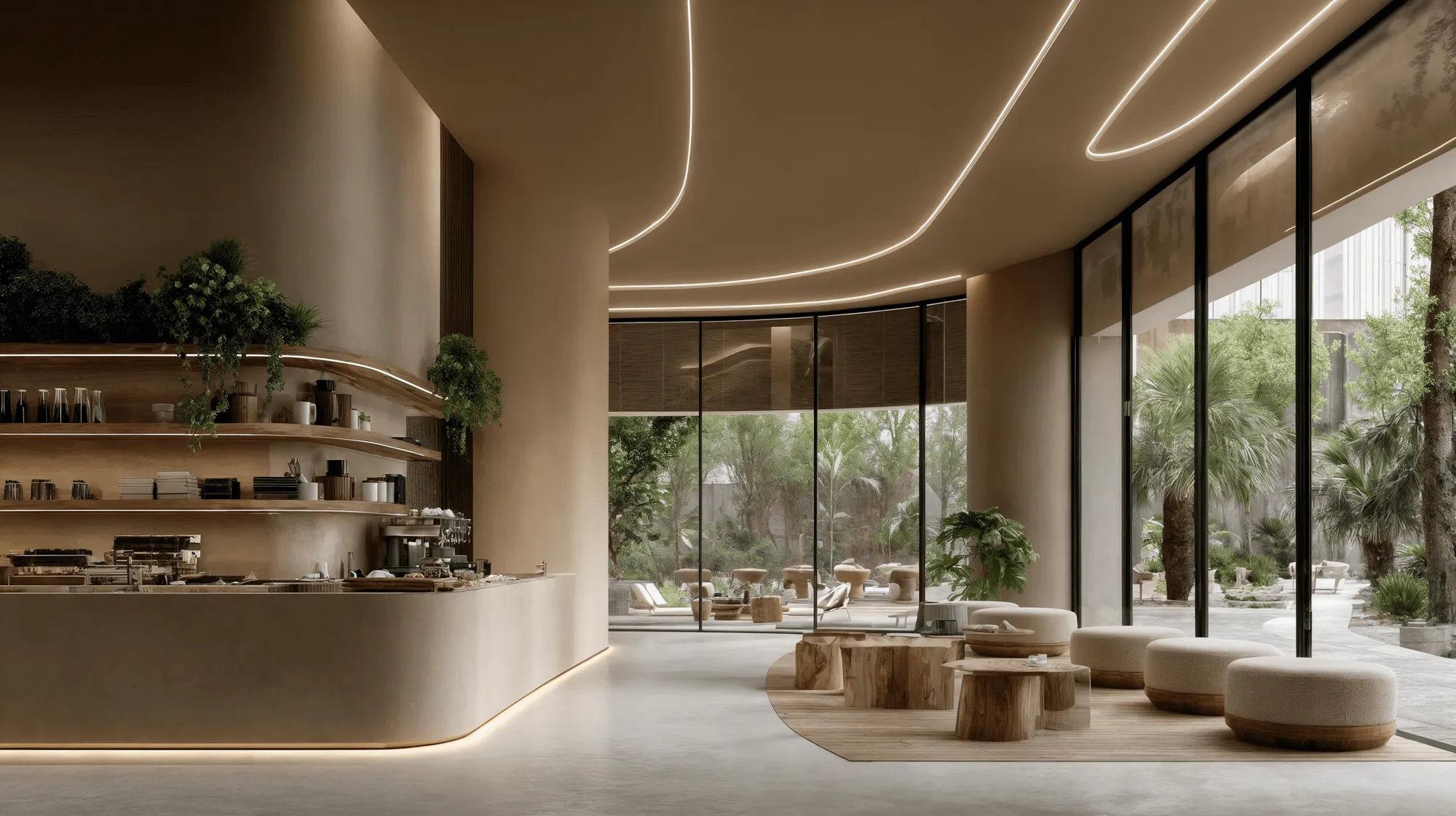
In hospitality — restaurants, hotels, spas — the design is not a backdrop for the service; it is the primary reason people choose to come and return. The food, the service, the price are table stakes. The space is the differentiator.
The question is not "can we afford to invest in great design?" The question is "what is the cost of not investing?" Consider what you spend on marketing, and compare it to what you spend on the environment in which your brand actually lives. At author. design®, our commercial work always begins with a business conversation before it becomes a design conversation. If you're thinking about an office remodel, a new retail concept, or a hospitality project, let's talk.