Cristian Sánchez
Jun 9, 2026 · 5 min read
Biophilic design has stopped being an aesthetic trend and become a wellbeing standard. At author. design® we apply it across much of our residential portfolio — not as decoration, but as a structural decision from the earliest stages of a project.
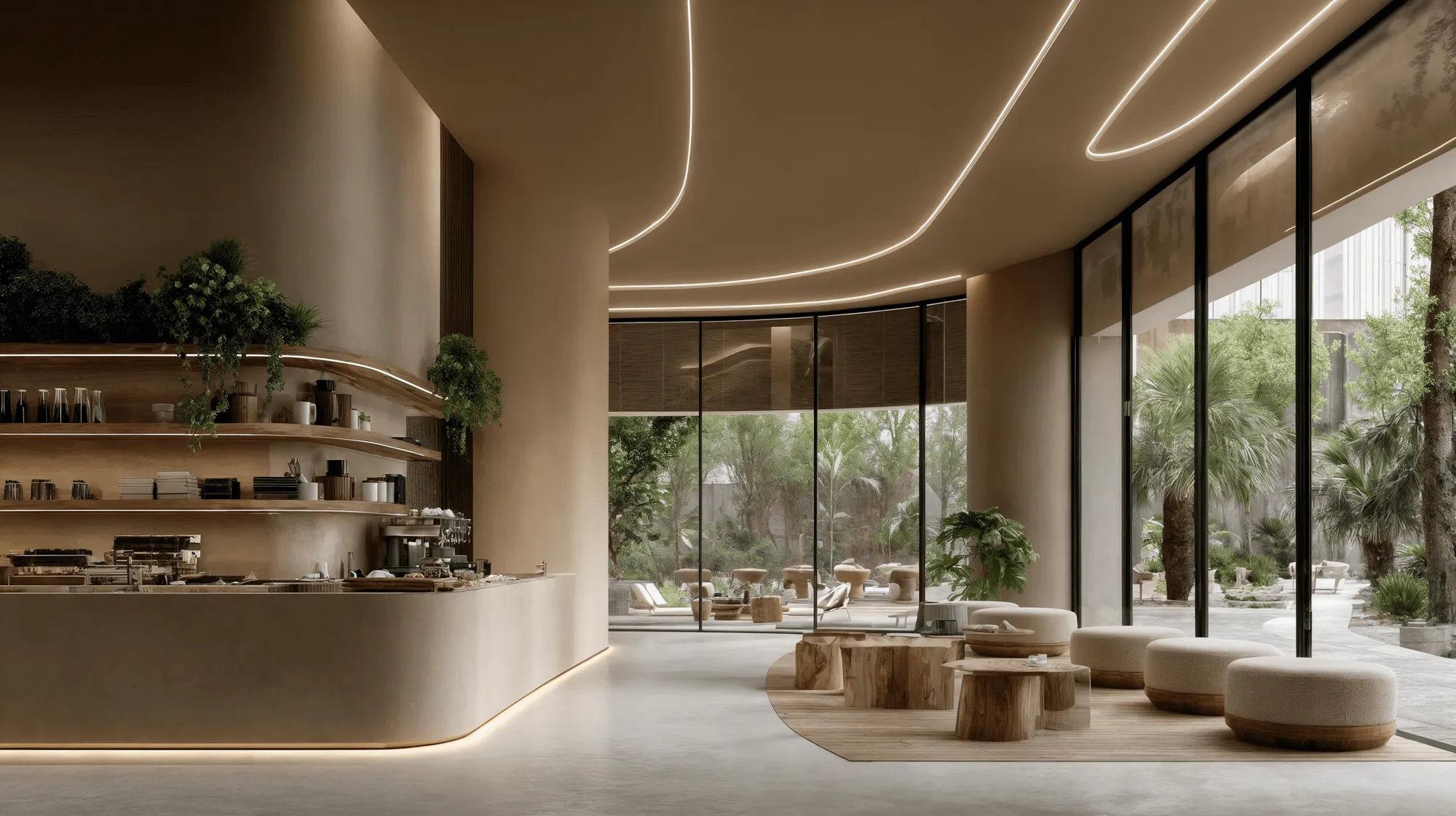
It's not about adding plants to an already-finished space. It's designing the relationship between interior and exterior from the start: window orientation, materials that age well over time (stone, wood, clay), and visual paths that connect every room to a natural element — a courtyard, a tree, the sky.
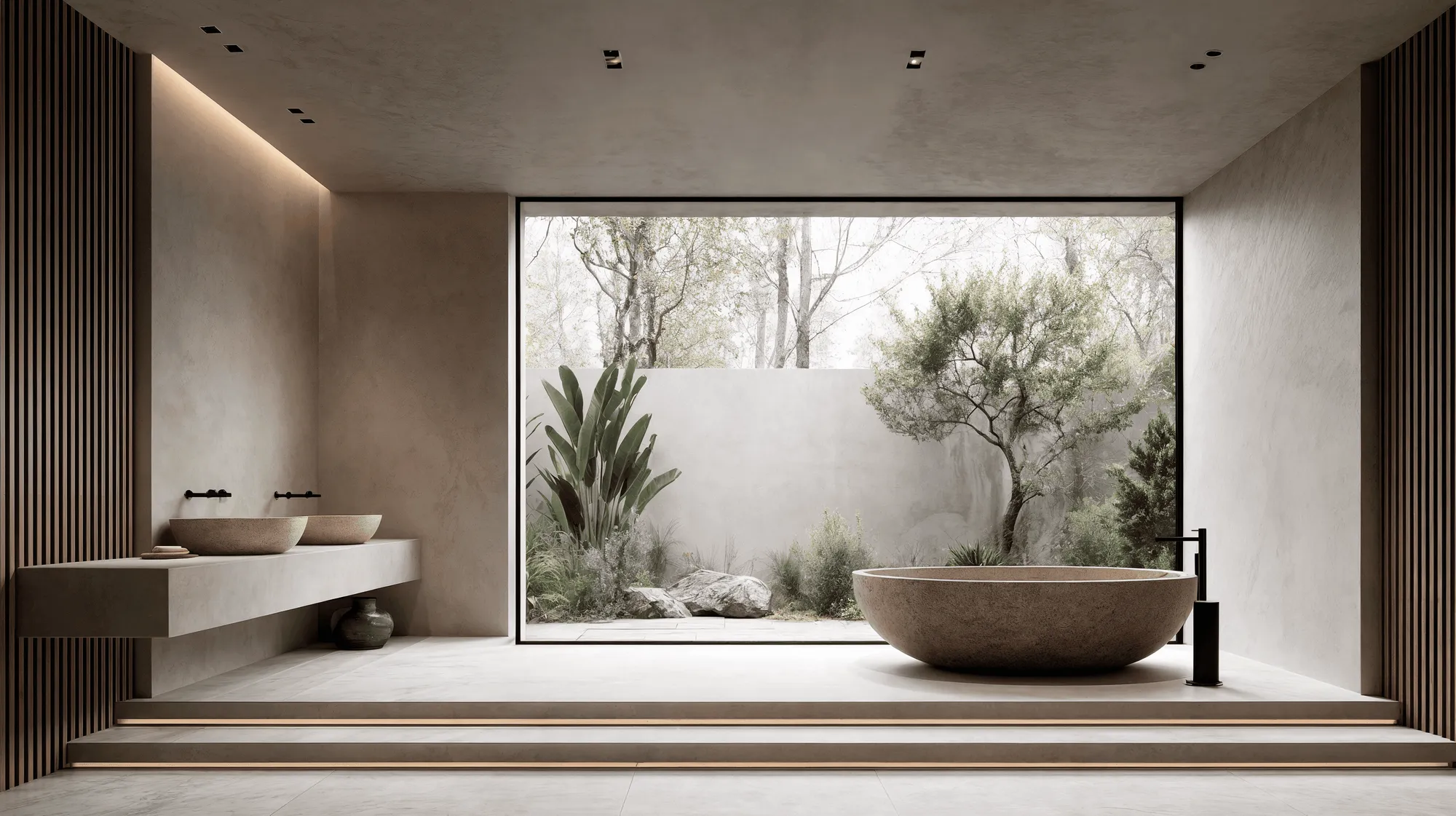
Controlled, indirect natural light; materials with real texture and porosity (not laminates that imitate it); vegetation integrated into the circulation — not just decorative — and framed views to the outside from the spaces where people spend the most time (kitchen, living room, main bedroom).
A space connected to nature doesn't feel larger because of its square footage, but because of what can be seen from inside.
Wellbeing research in architecture is consistent: exposure to natural light and vegetation reduces perceived stress and improves sleep quality and concentration. In commercial spaces, it also increases dwell time — a direct factor in retail and hospitality performance.
In Umbral Residence and the spa-style bathrooms across several of our residential projects, we integrate floor-to-ceiling windows facing private gardens and stone materials left unpolished, letting the natural texture take center stage. If you want your next project to incorporate these principles from the first sketch, let's talk.